
Drywall repair
Hang, tape, mud and sand, with common textures matched.
Services
Fast Guys Remodeling does interior painting for homes in Blue Springs and the eastern Kansas City metro: walls, ceilings, baseboards, trim and doors. Paint only looks as good as the surface under it. So we protect floors and furniture, patch holes and cracks, sand rough areas and prime where needed before any color goes on.
Tell us which rooms you have in mind. We will talk through the prep, the order of work and what to decide first.
Get a quote

We paint the surfaces that make a room look finished:
Kitchens and bathrooms need extra care because of moisture and grease. We prep those rooms with that in mind and match the paint finish to the room. Painting often goes hand in hand with other work, such as drywall repair before paint or carpentry and trim that needs to be primed and painted.
Not sure paint is enough? Read interior painting vs a full remodel to compare.

A clean finish comes from the steps before the first coat. A typical interior prep runs in this order:
Skipping a step shows up later as peeling, flashing patches or lines you can see in side light. If you are planning to paint yourself, our painting prep checklist explains each step in more detail.
Bigger repairs come first. A water-stained ceiling or a cracked wall needs the cause found and the board repaired before paint. See drywall repair for how that is done.
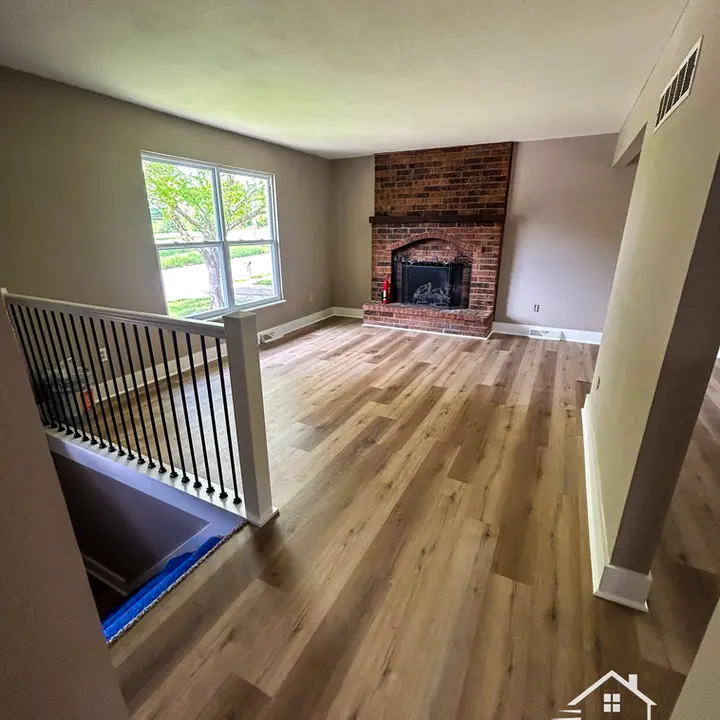
Most interior jobs follow the same sequence.
You tell us what to paint, what to leave and any repairs you have noticed.
Ceilings first, then walls, then trim and doors, so drips never land on finished work.
Protect, patch, sand, caulk and prime as described above.
Two coats is typical on walls; dark-to-light color changes and bare patches can need more.
We look at the finished rooms with you, touch up and remove the protection.
Timing depends on how many rooms, how much prep and how long patches and primer need to dry. Tell us the rooms and we will give you a realistic schedule.
Ready for step 1? Tell us the room and your city.
Sheen changes how a wall looks and how it wears.
Higher sheen shows more flaws, which is another reason prep matters. Ask us which sheen fits each room before you buy paint.
Painting quotes vary because jobs vary. These are the factors that move the price most:
| Factor | Why it matters |
|---|---|
| Room size and ceiling height | More wall area means more paint and more time. Tall ceilings add setup. |
| Surface condition | Holes, cracks, stains and old peeling paint need patching, sanding and priming first. |
| What is included | Walls only, or also ceilings, trim and doors. Trim and doors take detail work. |
| Color change | A big jump from dark to light usually needs primer and extra coats. |
| Furniture and access | Rooms full of furniture, stairs and high spots take longer to set up. |
| Paint choice | Higher-quality paint costs more per gallon and often covers better. |
When you compare quotes, check that each one lists the same rooms, the same surfaces and the same prep. A low number that skips prep is not the same job.
Send photos of the rooms when you call or write. We will explain what the job involves and what drives the price.
Ready to talk it through? Tell us about your project.
Homes built before 1978 may contain lead-based paint.
Federal rules (EPA's Renovation, Repair and Painting rule) require lead-safe work practices for paid renovation in most pre-1978 homes. Ask any contractor for their EPA lead-safe certification before work starts.
Source: U.S. EPA, Lead Renovation, Repair and Painting Program.
The median home in Blue Springs was built in 1986 (U.S. Census Bureau, ACS 2024 5-year estimates), so most homes here date after 1978. Older neighborhoods nearby are different. If you live in Independence, where the median home was built in 1967, see our Independence remodeling page.
Source: U.S. Census Bureau, American Community Survey 2024 5-year estimates (Table B25035), via Census Reporter.


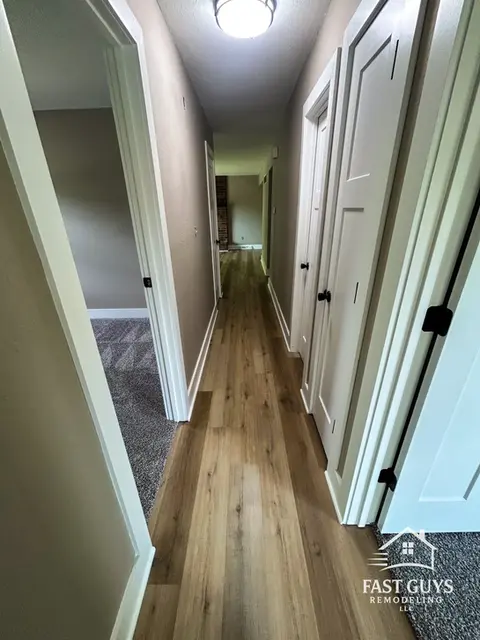

See more painting photos.
Fast Guys Remodeling works in Blue Springs, Grain Valley, Lee's Summit, Independence and across the Kansas City metro. See all service areas.
Painting in Blue Springs? See our Blue Springs remodeling page.
Cost and value
Price depends on the surface area, ceiling height, the amount of prep and repair, the number of coats, whether trim, doors and ceilings are included and how much has to be moved or protected. Dark-to-light color changes and glossy or damaged surfaces take more coats. Ask for a written scope that lists each room and each surface, and compare quotes on that basis. Describe your rooms when you call and we will explain what would move your price.
Next step: Interior painting cost and price drivers
For a home you live in, painting is treated as maintenance, not an improvement. IRS Publication 523 lists painting among repairs that are not added to your home's basis, unless it is part of a larger remodel or restoration, in which case the whole job can count as an improvement. Rental property follows different rules, so ask a tax professional.
Timing
A single room with ordinary prep often takes a day or two once patching, priming, two coats and drying time are counted, and a whole house takes longer. Prep, trim, ceilings and repairs add more than the wall painting itself. Latex paint typically needs a few hours to dry between coats, and weather and humidity can lengthen that. Ask for a start date, a finish date and what happens if a repair is bigger than expected.
Next step: Interior painting process and timeline
Process and scope
Most walls need a primer where bare, patched or stained, then two coats of finish paint. A light color over a similar light color may cover in fewer coats, while a bold or dark change often needs more. Porous drywall, new patches and glossy old paint change the answer. Two coats give an even color and durable film; one coat tends to look patchy.
Clear the floor space and small items from the rooms, take pictures and mirrors off the walls and empty closets or shelves that will be painted. Move pets and valuables to another area and tell the crew where they can park, get water and use a bathroom. Point out cracks, stains or repairs you want fixed. Heavy furniture can usually stay in the room's center under cover.
Often, yes: walls, ceilings, baseboards, trim and doors can be planned together. Cabinets are different, because they need careful cleaning, sanding, priming and curing time, so they are usually scheduled as their own phase. Tell us what you want painted and we will say how we would sequence it.
It is better not to. Exterior paint contains additives for sun, mildew and temperature swings that can give off odor indoors for longer, while interior paint breaks down outdoors and fades or chalks. Use each where it is labeled to be used. Specialty cases such as a covered porch or a bathroom have products made for the damp or semi-exposed location.
Next step: Interior painting materials explained
Often yes: on bare drywall, patched areas, stains, glossy old paint, big color changes and new wood. Primer seals the surface so the finish coat dries evenly and sticks. If walls are clean, sound and a similar color, a quality paint-and-primer product may be enough. Stains and smoke need a stain-blocking primer, or they show through.
Ceiling paint is usually flat white, spatters less and hides flaws, but it is not as washable or scuff-resistant as wall paint, so it is a poor choice for walls and trim. Flat is the usual ceiling sheen, because it hides imperfections and avoids glare; some bathrooms use a moisture-resistant formula. Matching the ceiling color to the walls is a style choice, not a rule. Stained ceilings need a stain-blocking primer first.
Next step: Choosing materials (interior painting)
Yes. Painters patch holes and cracks, sand rough areas and prime where needed, because paint over damage shows every flaw. Bigger drywall damage, such as water-stained ceilings or large holes, is a drywall repair job first, and painting follows once the patch has been finished and primed. Point out the damage and we will tell you which route it takes.
Next step: Drywall services
We protect floors and furniture before painting starts. Small items should be cleared by you, and heavy pieces are usually pulled to the room's center and covered. Tell us about fragile or valuable items, and we will talk through what needs to be moved.
Satin or semi-gloss is a common choice in kitchens and bathrooms because the surface is easier to wipe and holds up better to moisture and cleaning than flat paint. Living-room and bedroom walls are often flat or eggshell, ceilings are usually flat, and trim and doors are often semi-gloss. Higher sheen shows wall flaws more, so surface prep matters. Ask for a sample on your wall in your lighting.
Paint is usually dry to the touch in a few hours and ready for a second coat after about four hours for latex, but it takes longer to cure fully. Many guides cite about two to four weeks for latex. Until then, avoid scrubbing, taping items to the wall and pushing furniture against it. Humid or cold conditions slow drying, so check the label.
Living in your home
Usually, yes, especially with low-odor water-based paints and good ventilation. Plan to keep pets, children and anyone sensitive to odors out of the room being painted, open windows when weather allows and keep the work area closed off. Odor fades in days, but paint takes longer to fully cure, so wait a few weeks before scrubbing walls or pushing furniture against them.
Risks and safety
EPA says lead-based paint in good shape is usually not a problem, and that painted surfaces should be inspected and kept from chipping or peeling. Small damaged areas under 6 square feet can be fixed without sanding. Do not remove lead paint yourself. For larger painting or repair projects in a pre-1978 home, hire a contractor with EPA lead-safe certification or follow EPA's lead-safe work practices.
Next step: Interior painting safety and lead rules
Yes. Homes built before 1978 may contain lead-based paint. EPA's Renovation, Repair and Painting rule requires lead-safe work practices when a paid contractor disturbs painted surfaces in most pre-1978 homes, and EPA recommends hiring a firm with EPA lead-safe certification. Sanding and scraping are the risky steps. Ask any painter for their EPA lead-safe certification before work begins.
Next step: Lead-safe rules for older homes (interior painting)
No question matches that search. Call (816) 267-1660 or request a quote and ask us directly.
Still have a question? Call or request a quote.
Describe the damage or the rooms. Photos help when you call or write.
Share the room, your city and what you want changed. We will call you back at the number you gave.